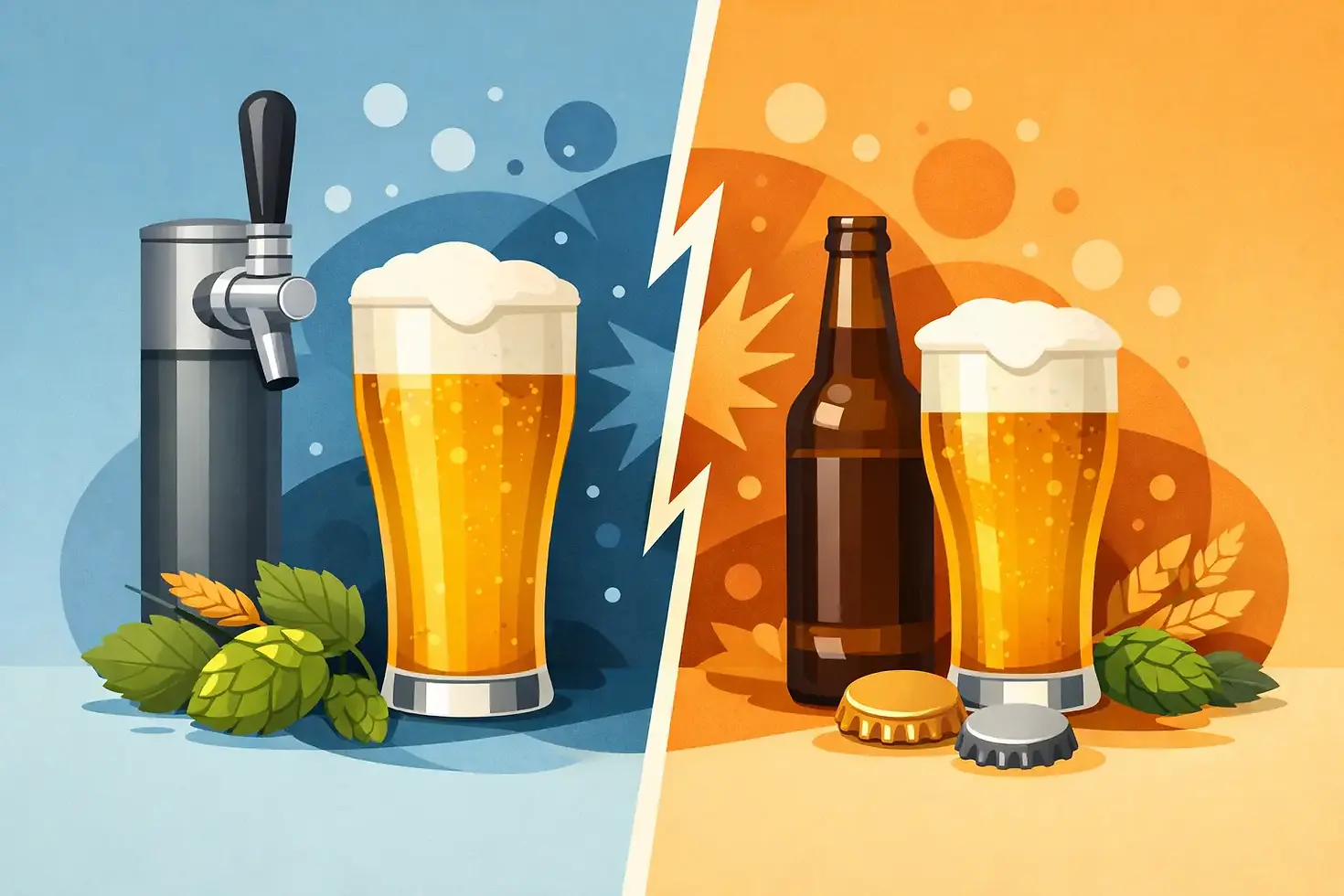
Draft Beer vs Bottled Beer: What Tastes Better?
- Austin Scaccia
- 1 day ago
- 6 min read
You notice it pretty quickly at the bar. One person orders a pint without thinking twice, and the next asks for a bottle because they swear it tastes better. The truth about draft beer vs bottled beer is a lot less dramatic than people make it sound. Neither is automatically better every time. It depends on freshness, storage, the beer style, and how well the bar handles what it serves.
If you like beer but do not care about brewery jargon, that is the useful answer. Still, the differences are real, and once you know what affects the pour, it gets a lot easier to order what you actually want.
Draft beer vs bottled beer: the real difference
The biggest difference is packaging and delivery. Draft beer comes from a keg and is pushed through a tap system into your glass. Bottled beer is packaged at the brewery, sealed, and opened when you order it. That sounds simple, but those two paths can change flavor, mouthfeel, and freshness by the time the beer reaches you.
Draft beer often feels fresher because it usually moves faster in a busy bar. If the keg was kept cold and the lines are clean, you get bright flavor, a good head, and the carbonation the brewer intended. That is why a clean, well-poured draft can taste lively and crisp.
Bottled beer has its own advantages. It is sealed tight, less dependent on a bar’s draft system, and more consistent if it has been stored properly. Open the bottle, pour it cleanly, and you often get a very reliable version of that beer. For some drinkers, that consistency is the whole point.
Why draft beer can taste better
When draft beer is good, it is really good. That usually comes down to freshness and presentation. Kegs are often delivered and rotated regularly, especially in places that sell a lot of beer. Less time sitting around can mean better hop aroma, better carbonation, and a cleaner finish.
There is also the simple fact that draft beer lands in a glass the way many brewers want it served. Aroma opens up more in a pint than it does from sipping straight from a bottle. That matters with pale ales, lagers, wheat beers, and just about anything where smell is part of the experience.
Temperature plays a role too. Draft systems are built to keep beer cold and stable. If that system is dialed in, the beer pours at a better drinking temperature than a bottle that sat too long in the wrong cooler or got warm during transport.
But draft has a catch. Tap beer is only as good as the bar serving it. Dirty lines, old kegs, bad gas pressure, or poor temperature control can flatten the flavor fast. A beer that should taste bright can end up foamy, dull, or slightly off. That is why people can have one great draft somewhere and a disappointing one somewhere else.
Why bottled beer can taste better
Bottled beer gets underestimated because people assume draft is always the premium option. Not true. A well-stored bottle can be the better pour, especially if the draft setup is not maintained carefully.
The bottle protects the beer from exposure after packaging. Once it is sealed at the brewery, there are fewer steps between the beer and your glass. That reduces the chance of line issues, gas problems, or a sloppy pour affecting the result.
Bottles also work well for beers that are meant to hold up over time. Some stronger ales, specialty releases, and imported beers are packaged with stability in mind. In those cases, the bottle can deliver a very dependable taste profile.
There are trade-offs here too. Light is a problem for bottled beer, especially in clear or green glass. That skunky smell some people notice is often light damage. Heat is another issue. If bottles are not kept cold enough, flavor can drop off. A bottle is convenient, but it is not immune to bad storage.
Freshness matters more than format
If you want the shortest answer to draft beer vs bottled beer, here it is: the fresher beer usually wins.
A fresh keg on a clean line will often beat a bottle that has been sitting too long. A fresh bottle stored cold and away from light can absolutely beat a neglected tap. People love to argue about the container, but the bigger question is how long the beer has been around and how it has been handled.
This matters most with hop-forward beers. IPAs and pale ales can lose their edge when they age. The bright citrus, pine, or tropical notes fade first. Lagers and darker beers may hold up a bit better, but even they are not helped by warm storage or too much time on the shelf.
So if you are deciding what to order, think less about the debate and more about turnover. A busy neighborhood spot with active tap lines is often a good bet for draft. A bottle from a trusted brand that is stored right can be just as solid.
Carbonation and mouthfeel are not the same
One reason people feel strongly about this topic is that draft and bottled beer can feel different, even when the recipe is the same.
Draft beer often seems softer and smoother. Part of that is the pour. Part of it is the carbonation setup in the keg system. Nitrogen blends, common in some styles, can create an extra creamy texture. Even regular CO2 draft pours can feel rounder in the glass.
Bottled beer can come across as sharper or more bubbly, especially right after opening. Some drinkers like that snap. It can make lighter lagers feel extra crisp and refreshing. Others prefer the smoother feel of a draft pint.
Neither reaction is wrong. This is one of those areas where personal preference matters as much as quality.
Does beer style change the answer?
Absolutely. Some styles shine on draft. A crisp domestic lager, a pilsner, a wheat beer, or a stout can be especially satisfying from the tap because the texture and aroma come through so well in a fresh pour.
Other styles may be just as good, or even better, from a bottle. Strong Belgian ales, some barrel-aged beers, and specialty imports often hold their character nicely in package form. In those cases, the bottle is not second best. It is part of how the beer is meant to be enjoyed.
That is why broad statements do not help much. Saying draft is always better is like saying every burger is better with the same topping. Sometimes yes, sometimes no.
What to look for at the bar
If you want the better beer experience, look at the place serving it. A busy bar with good turnover, clean glassware, and a solid tap list is usually a good sign. If the pint comes out clear, properly headed, and cold without being ice dead, that draft system is probably doing its job.
For bottles, check the basics. Is it cold? Was it stored in a proper cooler? Does the beer style make sense in a bottle? If you are pouring it into a glass, does it smell fresh and taste clean? Those practical details matter more than beer snob talking points.
This is one reason local regulars tend to know what to order. They know where the taps are reliable, which beers move fast, and when a bottle is the safer pick.
Draft beer vs bottled beer for casual nights out
Most people are not running a blind tasting. They are meeting friends, grabbing dinner, and ordering what sounds good. In that setting, draft beer usually wins on atmosphere. There is something hard to beat about a cold pint with a proper head, especially when you are settling in for wings, fish fry, or a game on TV.
Bottled beer wins on familiarity and simplicity. You know exactly what you are getting, and some people just prefer it that way. No foam debate, no line concerns, no surprises.
At a place like The Rock Kitchen and Bar, where beer on tap is part of the draw, draft makes a lot of sense for drinkers who want freshness and variety. But if your go-to beer tastes right to you in a bottle, there is nothing wrong with sticking with it.
The best order is the one that fits the moment. If you want a crisp pint poured fresh, go draft. If you want the comfort of a beer you know in a package you trust, order the bottle. Good beer does not need a complicated rulebook. It just needs to be fresh, cold, and served right - and if you find a bar that gets that part right, you are already ahead.


Comments