
What Makes a Good Fish Fry?
Friday fish fry gets judged fast. One plate hits the table and you know right away if it was done right. If you have ever wondered what makes a good fish fry, the answer is not one big secret. It is a handful of details that all have to show up at the same time - fresh fish, crisp coating, hot fries, good sides, and service that gets dinner to the table the way it should.
A good fish fry is simple food, which is exactly why people notice when it misses. The fish cannot be bland. The breading cannot go soggy. The fries cannot feel like an afterthought. And if it is Friday night at a neighborhood spot, people also want consistency. They are not just ordering dinner. They are showing up for a weekly tradition.
What makes a good fish fry starts with the fish
The fish has to be the star. That sounds obvious, but plenty of fish fries lean too hard on heavy breading or oversized portions and forget that people still want to taste the fish itself. A good piece should be flaky, moist, and mild enough to work with the seasoning instead of fighting it.
Cod is a favorite for a reason. It has a clean flavor, a tender bite, and it holds up well whether it is beer battered or breaded. Haddock also works if you want a slightly richer flavor. Perch has plenty of fans too, especially for people who like a lighter, more delicate fry. There is no single correct choice, but there is a wrong one: fish that tastes old, watery, or overhandled.
Thickness matters too. Thin fillets can dry out fast in the fryer. Extra-thick cuts can end up undercooked in the center while the outside gets too dark. The best fish fry lands in the middle. You want a piece thick enough to stay juicy and substantial, but not so thick that the coating and fish cook at different speeds.
The coating can make or break it
Ask ten regulars what makes a good fish fry and you will probably get ten opinions on batter versus breading. Both can work. The real issue is texture.
A beer batter should fry up crisp and light, not heavy and doughy. It should cling to the fish without turning into a thick shell that takes over the whole bite. Good beer batter adds crunch and a little flavor, but it still lets the fish come through.
Breaded fish has its own advantage. When done right, it gives a more even crispness and a little more seasoning in every bite. It can also travel better for takeout, which matters if you are bringing Friday dinner home. The downside is that breading can get greasy fast if the fryer temperature is off or the fish sits too long before serving.
This is where a lot of places get exposed. Crispness is not just about the recipe. It is about timing. If fried fish waits under heat lamps or gets boxed too early, steam softens the coating and the whole plate loses something. The best fish fry gets from fryer to plate with some urgency.
Fryer temperature is a bigger deal than most people think
You do not need a culinary lecture to understand this part. If the oil is too cool, the coating absorbs grease and gets limp. If the oil is too hot, the outside browns too quickly while the inside struggles to catch up. Good fish fry depends on that middle ground where the coating crisps up fast and the fish stays tender.
That is one reason busy Friday service can actually help a fish fry. In a place that knows the routine, the kitchen is set up for it. Fish is moving, fryers are working, and the team is dialed into timing. A fish fry special is not just about offering fried fish one day a week. It is about doing enough volume to get really consistent at it.
Seasoning matters more than people admit
Nobody wants fish that tastes like plain flour and fryer oil. Seasoning does not need to be complicated, but it has to be there. Salt is the minimum. Pepper, paprika, garlic, or a house blend can round things out without making it taste fussy.
The key is balance. Too little seasoning and the fish feels flat. Too much and every bite starts tasting like the coating instead of the fish. The same goes for the fries and sides. A good fish fry plate should taste finished, not like it needs three packets of salt and a rescue mission from tartar sauce.
Sides are not filler
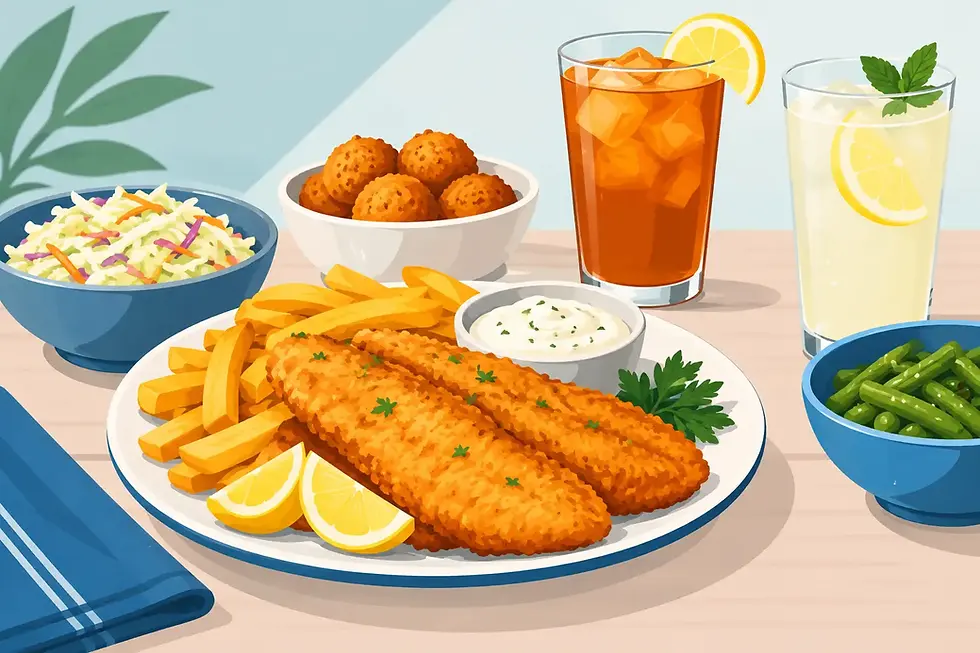
A fish fry is one of those meals where the sides tell you whether a place takes the whole plate seriously. Fries should be hot and crisp outside, soft inside, and salted while they still have some heat. Coleslaw should be cold, fresh, and have enough snap to cut through the fried food. Mac salad, potato salad, rye bread, or a dinner roll can all work depending on the style, but they should feel like part of the meal, not random extras dropped on the plate.
This is also where personal preference comes in. Some people want the classic fries and slaw, no discussion. Others want potato pancakes, baked fish, or a side that feels a little more old-school. There is room for all of that. What matters is that the plate makes sense together. Rich fish, salty fries, cool slaw, a wedge of lemon, and a solid tartar sauce is hard to beat because every part has a job.
Tartar sauce and lemon are not optional details
A lot of people do not think about condiments until they are missing or bad. Then it is all they think about. Tartar sauce should be cold, creamy, and bright enough to wake up the fish. If it tastes flat, too sweet, or straight from a bulk tub with no character, people notice.
Lemon matters for the same reason. A squeeze of acid cuts through fried food and keeps the meal from feeling too heavy. Malt vinegar has its place too, especially for people who grew up expecting it on the table. These finishing touches do not carry the plate by themselves, but they absolutely help complete it.
What makes a good fish fry is consistency
One great fish fry is nice. A reliably good fish fry every Friday is what keeps people coming back. That is the standard for a neighborhood bar and grill. Regulars want to know what they are getting. They want the same crisp coating, the same solid portion, the same hot fries, and the same easy decision at the end of a workweek.
That consistency matters for dine-in and takeout. Dine-in has the advantage because fried food is always best fresh. But takeout can still be strong if the kitchen packs it right and the timing is tight. That means venting the box enough to protect the coating and making sure the sides hold up on the ride home. Places that run a fish fry every week learn those details because they have to.
At The Rock Kitchen and Bar, that steady Friday fish fry appeal is exactly what people look for in a local spot. You want a place that understands the meal is not a one-off special. It is part of the routine.
Service and atmosphere count too
Fish fry is not fine dining, and that is part of the appeal. People want it hot, fast, and without a lot of nonsense. A good server who keeps the drinks moving, checks in at the right time, and gets extra sauce or lemon without making it a project can improve the whole experience.
The room matters too. A Friday fish fry should feel like Friday. Maybe it is families coming in early, couples grabbing dinner, or a group meeting up for a beer and a plate of cod. In a neighborhood place, that energy is part of the product. People are not only grading the fish. They are grading whether the night felt easy.
It is not about making it fancy
Some places try to dress fish fry up too much. Fancy toppings, oversized garnishes, or sauces that pull the plate in five different directions can miss the point. Fish fry works because it is straightforward comfort food. The goal is not to reinvent it. The goal is to do the basics really well.
That also means understanding trade-offs. A huge piece of fish looks impressive, but if the coating slips off or the center turns soft, bigger was not better. Extra-heavy batter gives you crunch for a minute, but it can overpower the fish and fall apart halfway through the meal. Loaded-up sides can sound good on paper, but they can make the plate feel cluttered. Better fish fry usually comes from restraint.
The best version is honest. Good fish. Crisp fry. Proper sides. Cold beer if that is your move. Quick service. Fair price. That is why people talk about their favorite fish fry like it is a local institution instead of just another menu item.
If you are deciding where to spend your Friday, keep it simple. Look for the place that gets the details right every week, because a good fish fry is never just about fried fish - it is about leaving full, happy, and already thinking about next Friday.


Comments